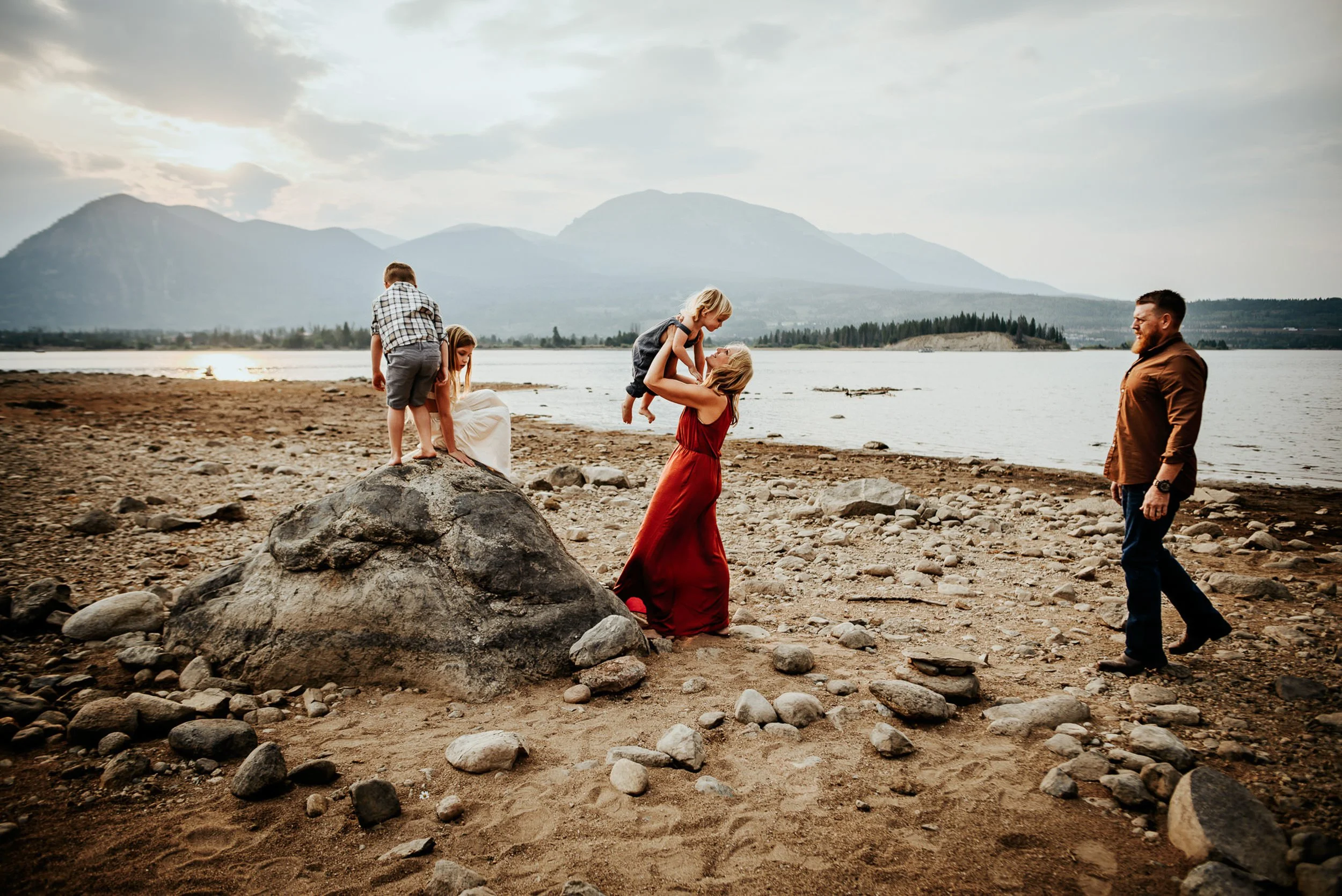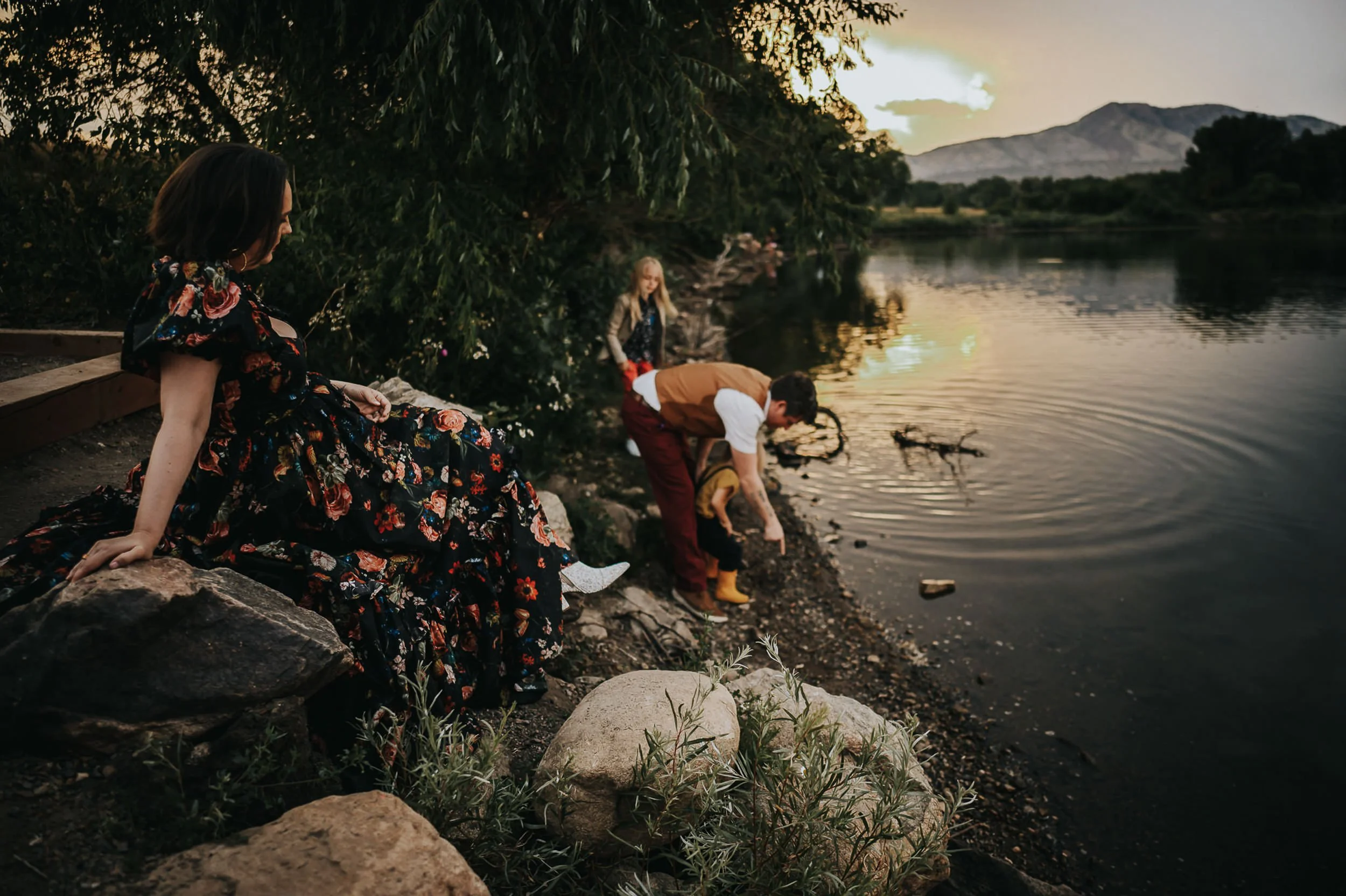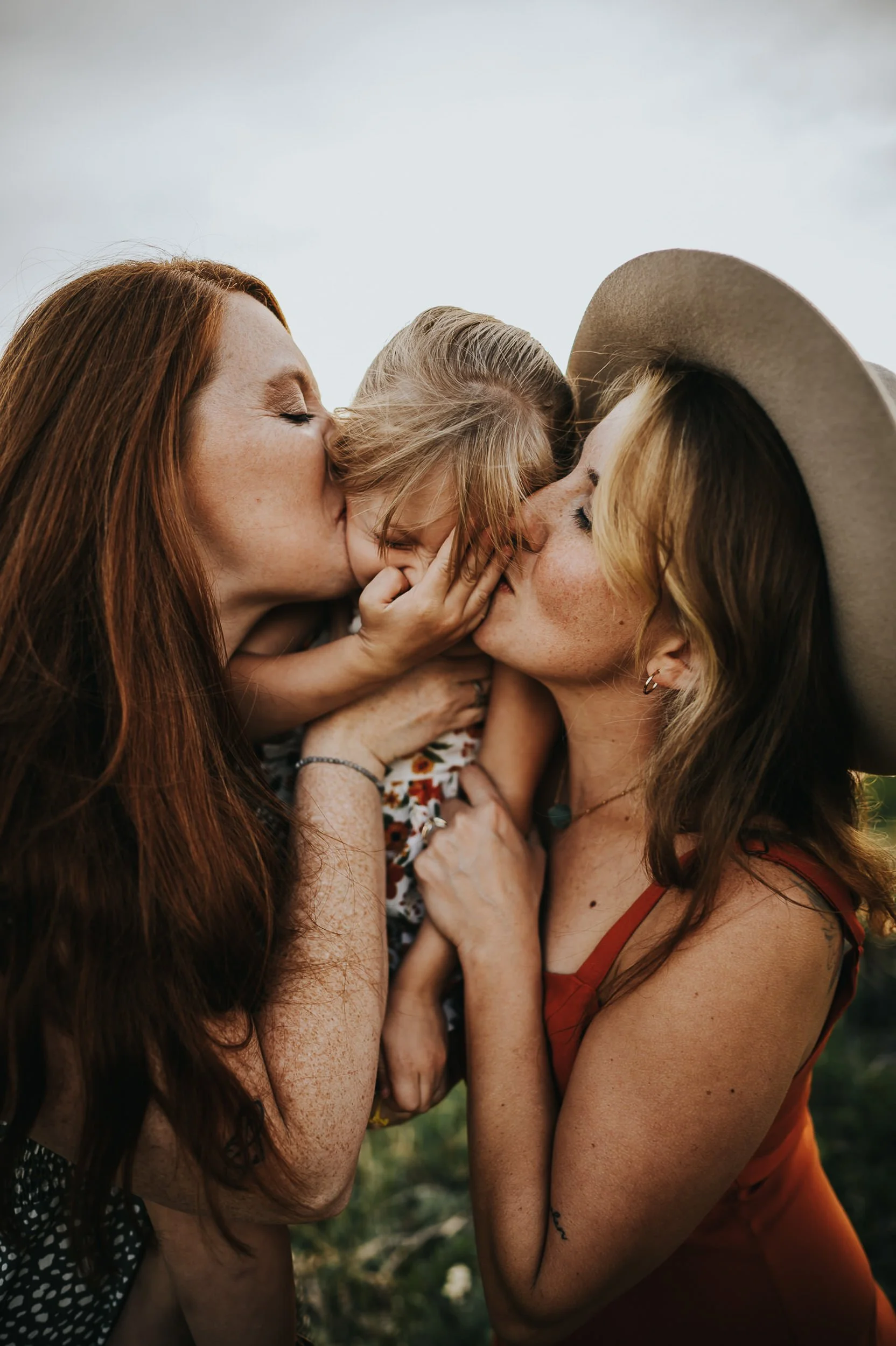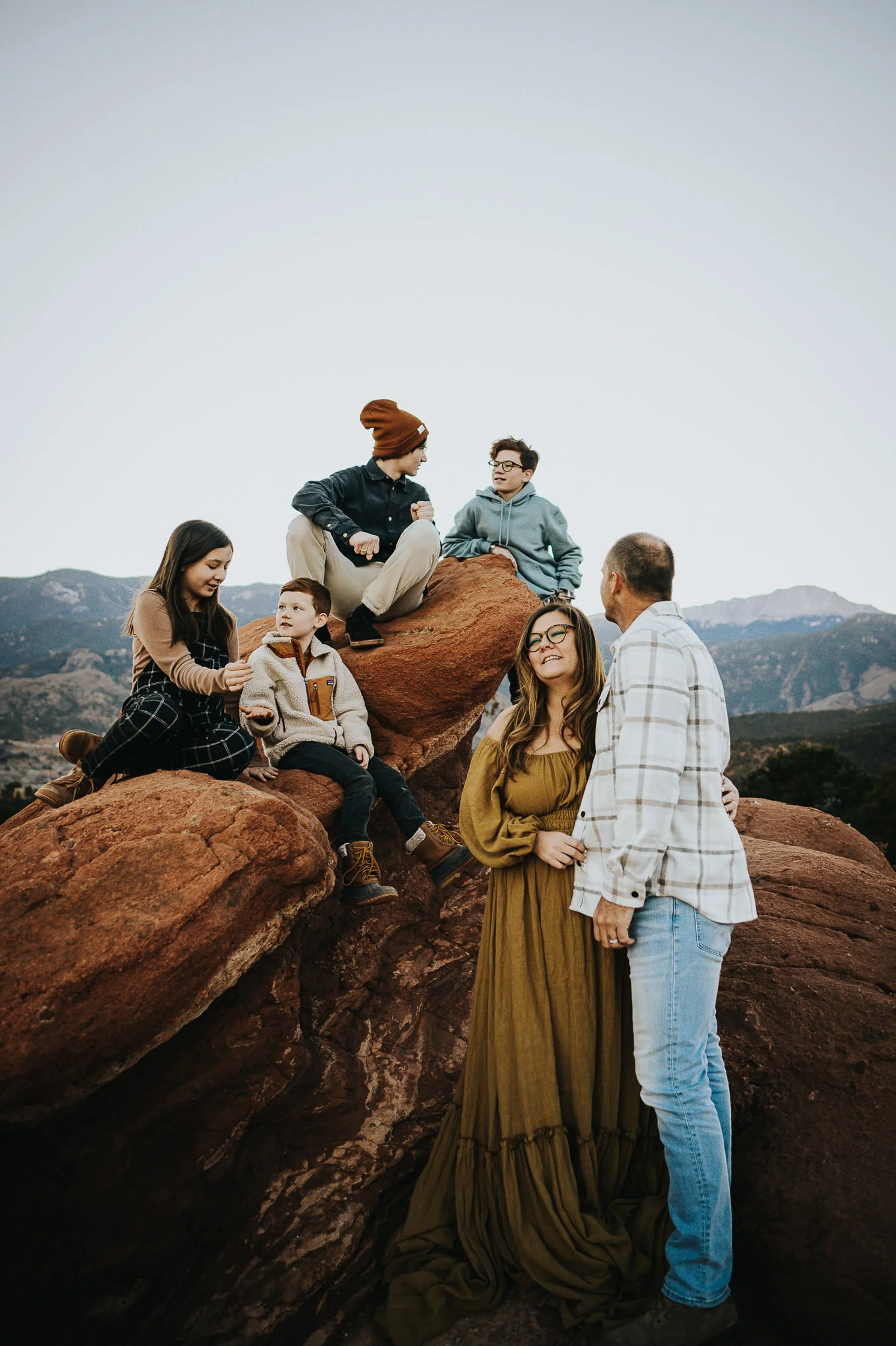
You don't have to match. In fact, please don't.
I know the impulse. Everyone in cream. Everyone in denim and cream. Everyone in the same shade of navy. It feels safe. It feels like a decision you can't mess up. But when everyone wears the exact same thing, something gets lost. The image flattens. Individual personalities disappear. You become a block of color instead of a family.
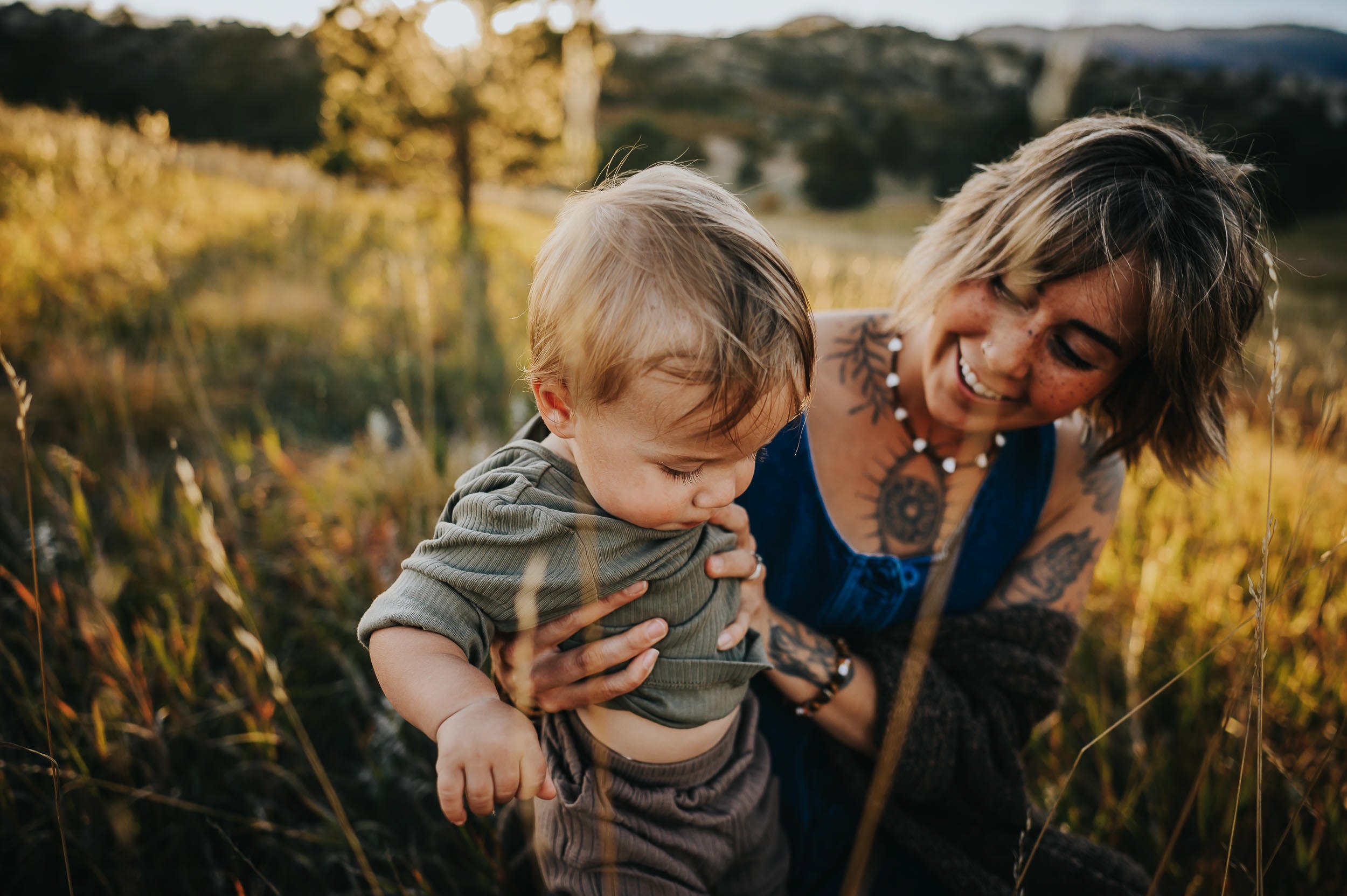
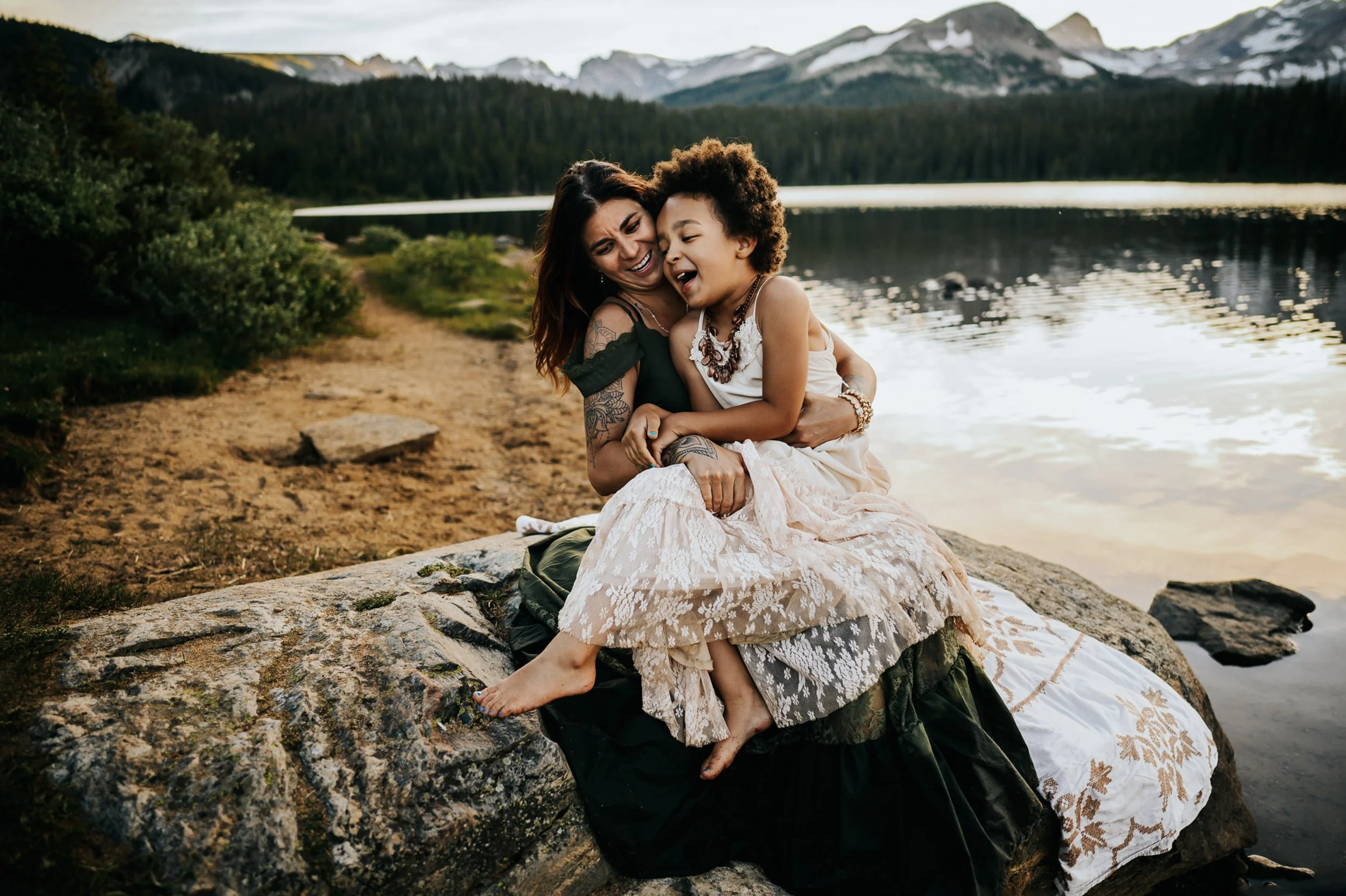
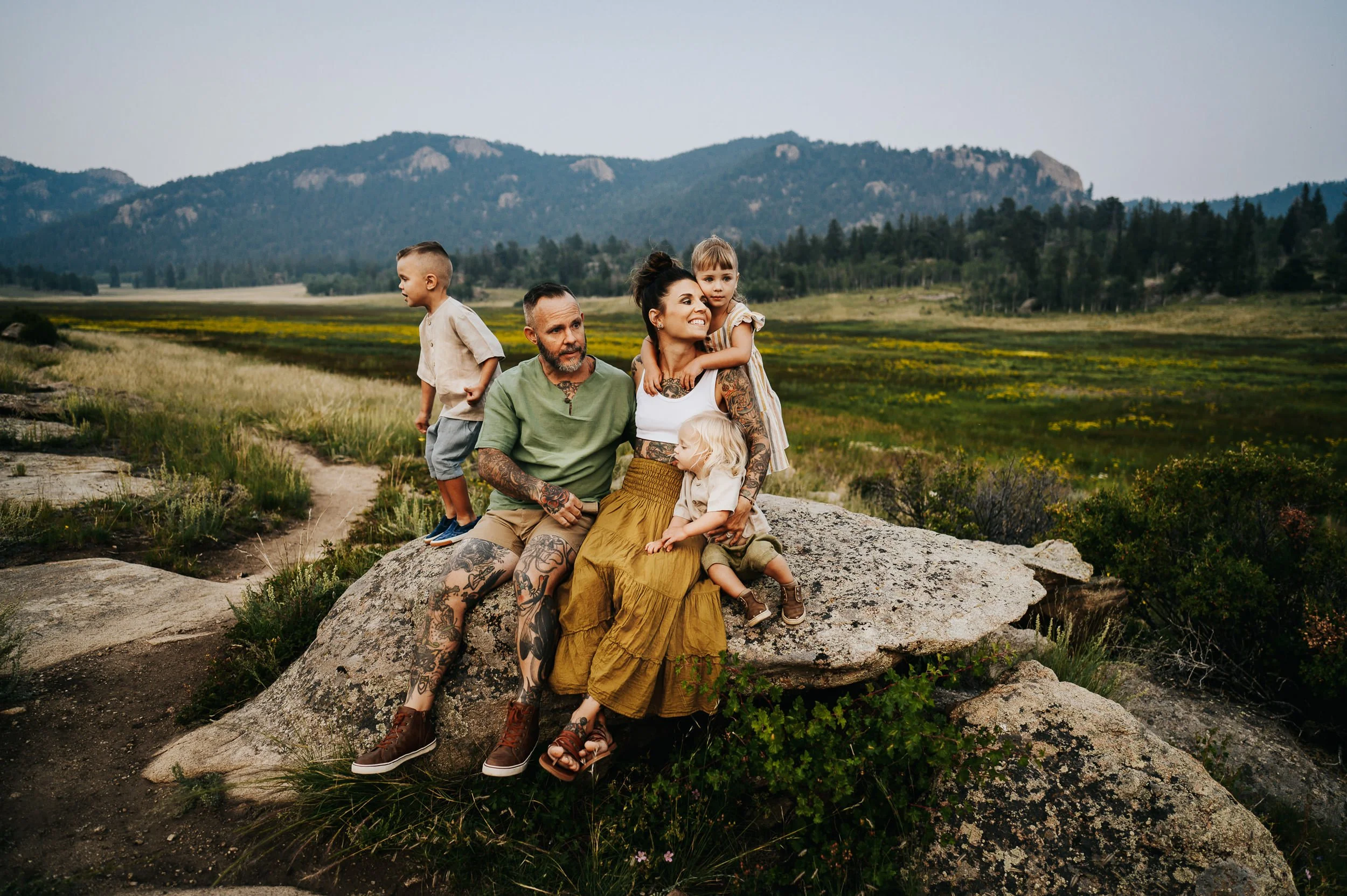
What works better is coordination. A shared palette with variety within it. Colors that live well together, with different tones and textures creating depth and visual interest. You're not matching, you're harmonizing. And that looks so much more natural in photographs.
This is something I help my clients with all the time. If you've ever stared into your closet wondering how to make everyone look good together without looking like a catalog ad, this guide is for you.
And if you want personalized help, I offer wardrobe styling guidance to all my family session clients. But let's start with the foundations.
The problem with matching
When everyone wears the same color, the eye doesn't know where to land. There's no visual hierarchy. No one stands out.
In a photograph, you want faces to be the focus. You want connection to draw you in. When everyone is wearing identical cream shirts, the shirts become the story instead of the people inside them.
Matching also tends to look dated. Think about family portraits from the 80s and 90s, the matching denim, the coordinated sweaters. There's a reason that style feels like a time capsule. It prioritizes uniformity over authenticity.
The families I photograph don't look like they got dressed by a stylist who wanted them to disappear into each other. They look like themselves, connected, cohesive, but still individual.
That's the goal.
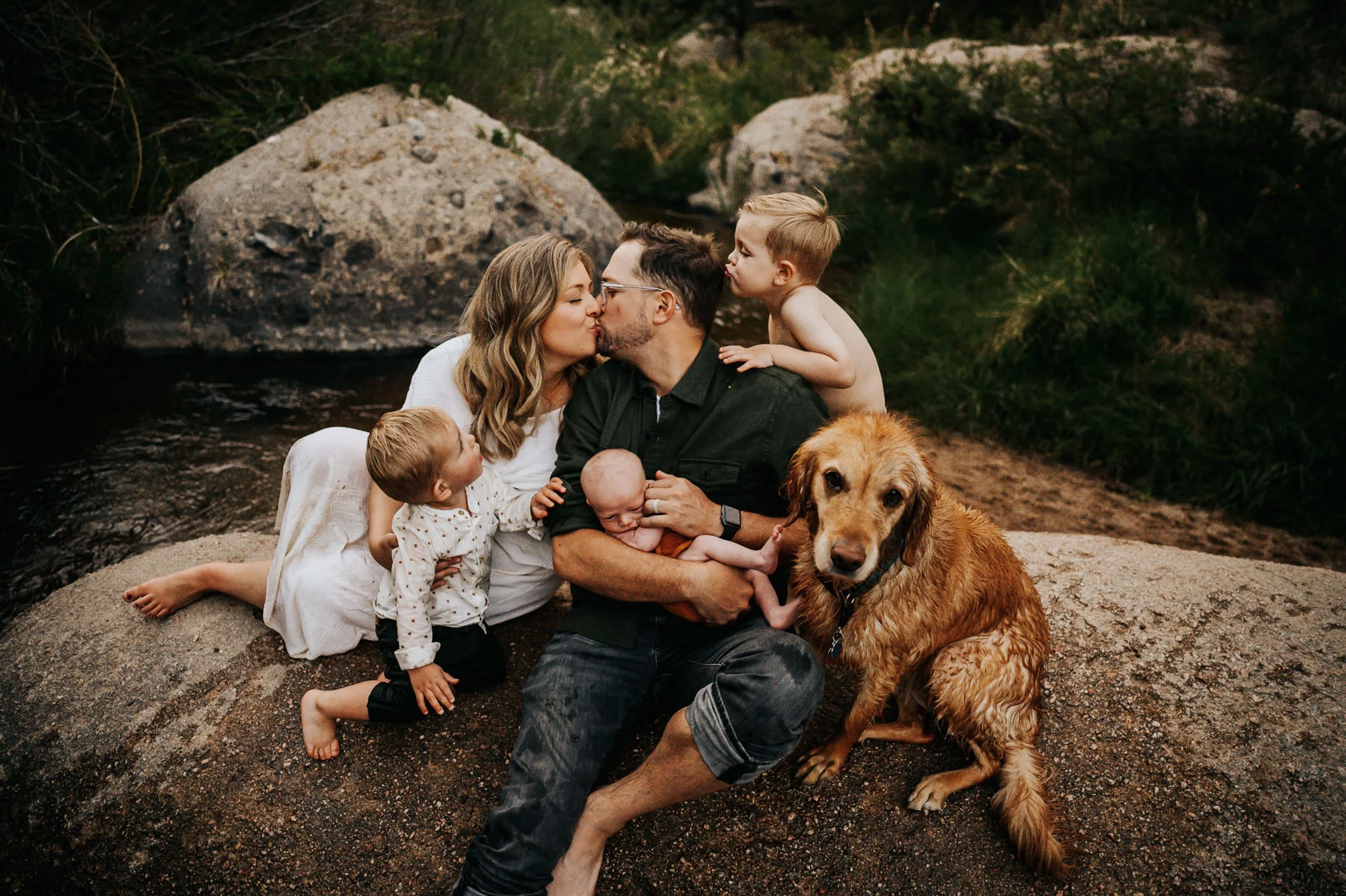
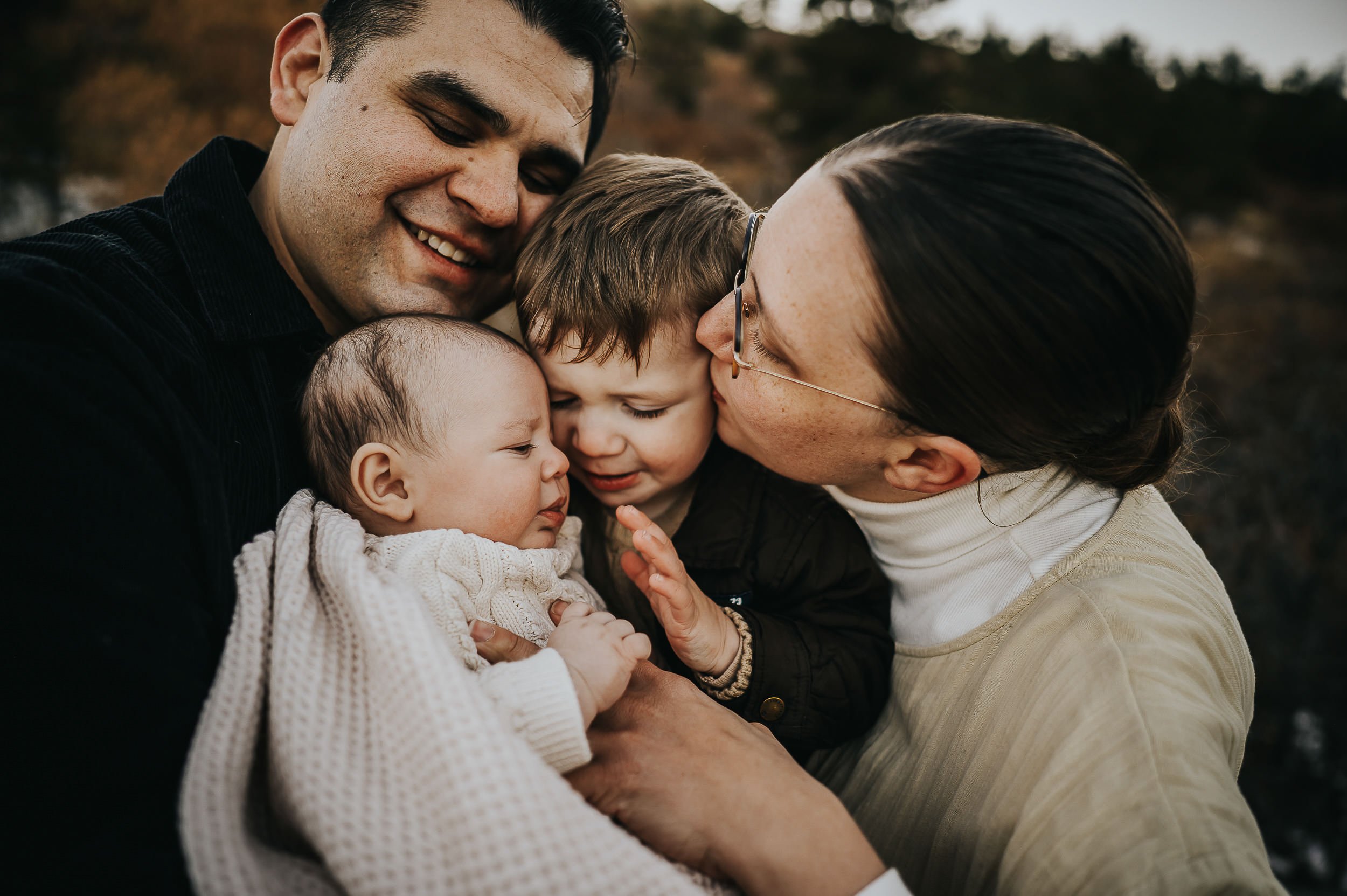
Coordination means harmony, not sameness
Think of your family's outfits like a painting. You're not filling the canvas with one color. You're choosing a palette, a range of tones that complement each other, with variety that creates visual interest.
Harmony means:
Colors that live in the same family or complement each other naturally
A mix of light and dark tones so no one blends in or washes out
Texture and pattern used intentionally to add depth
Each person looking like themselves while still feeling connected to the whole
When I look at a well-coordinated family, I see a color story. Not a uniform.
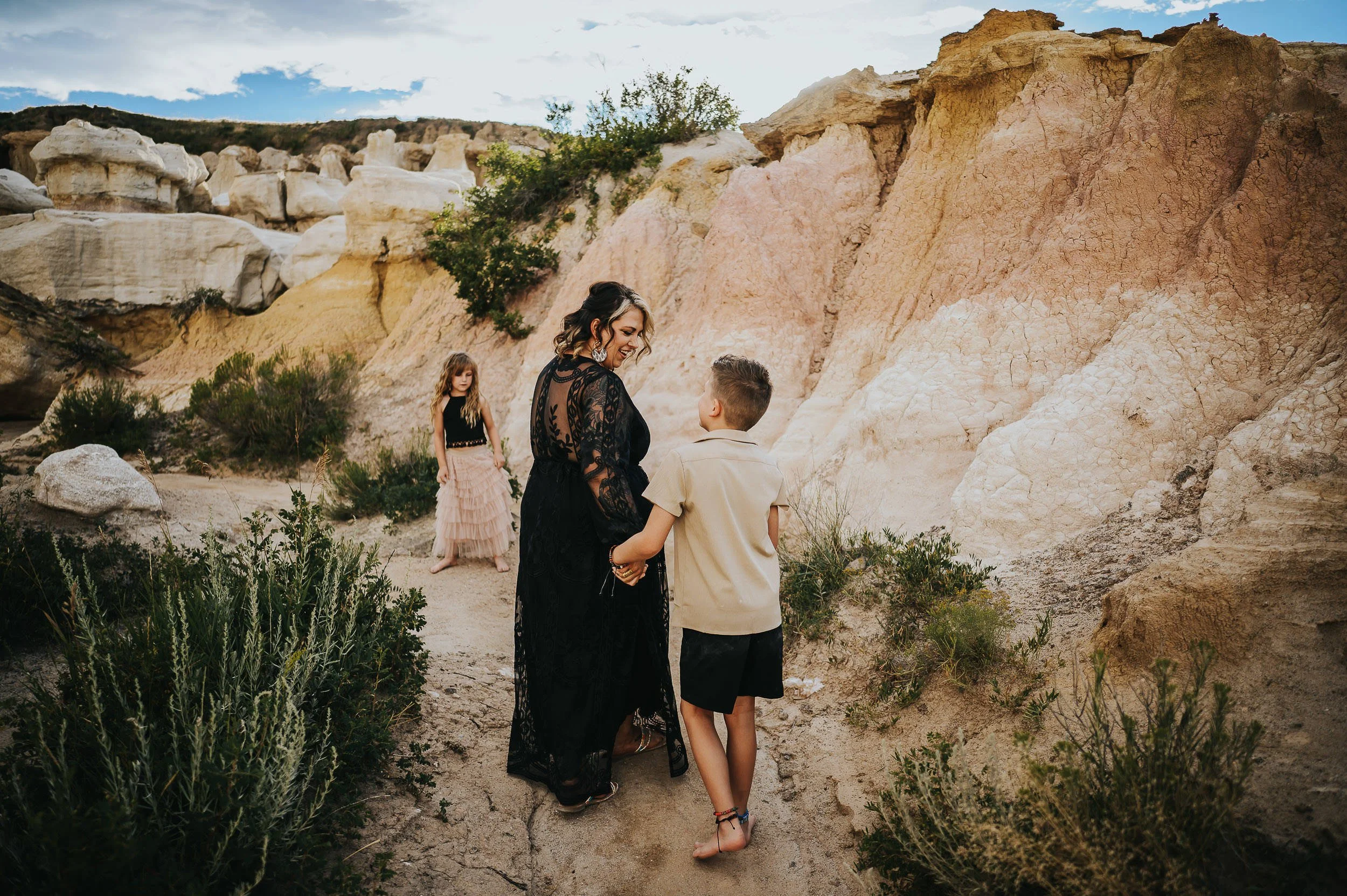
Start with one anchor piece
The easiest way to build a coordinated wardrobe is to start with one piece you love.
Usually this is mom's outfit. A dress, a jumpsuit, a top you feel beautiful in. Something with color or texture you can build from.
Once you have that anchor, pull colors from it for everyone else. If your dress has forest green and ivory tones, your partner might wear tan or olive, and your kids might wear cream, soft gold, or muted prints that echo the palette.
You're not matching to the dress. You're building a world around it.
What makes a good anchor piece?
Something you feel confident in
A color or print with enough complexity to pull from (solids work too, but multi-tonal pieces give you more options)
Something that moves well and photographs beautifully
Something you'd actually wear again, not a costume
If mom doesn't want to be the anchor, that's fine too. Start with whoever has the strongest opinion about what they're wearing, and build around that.
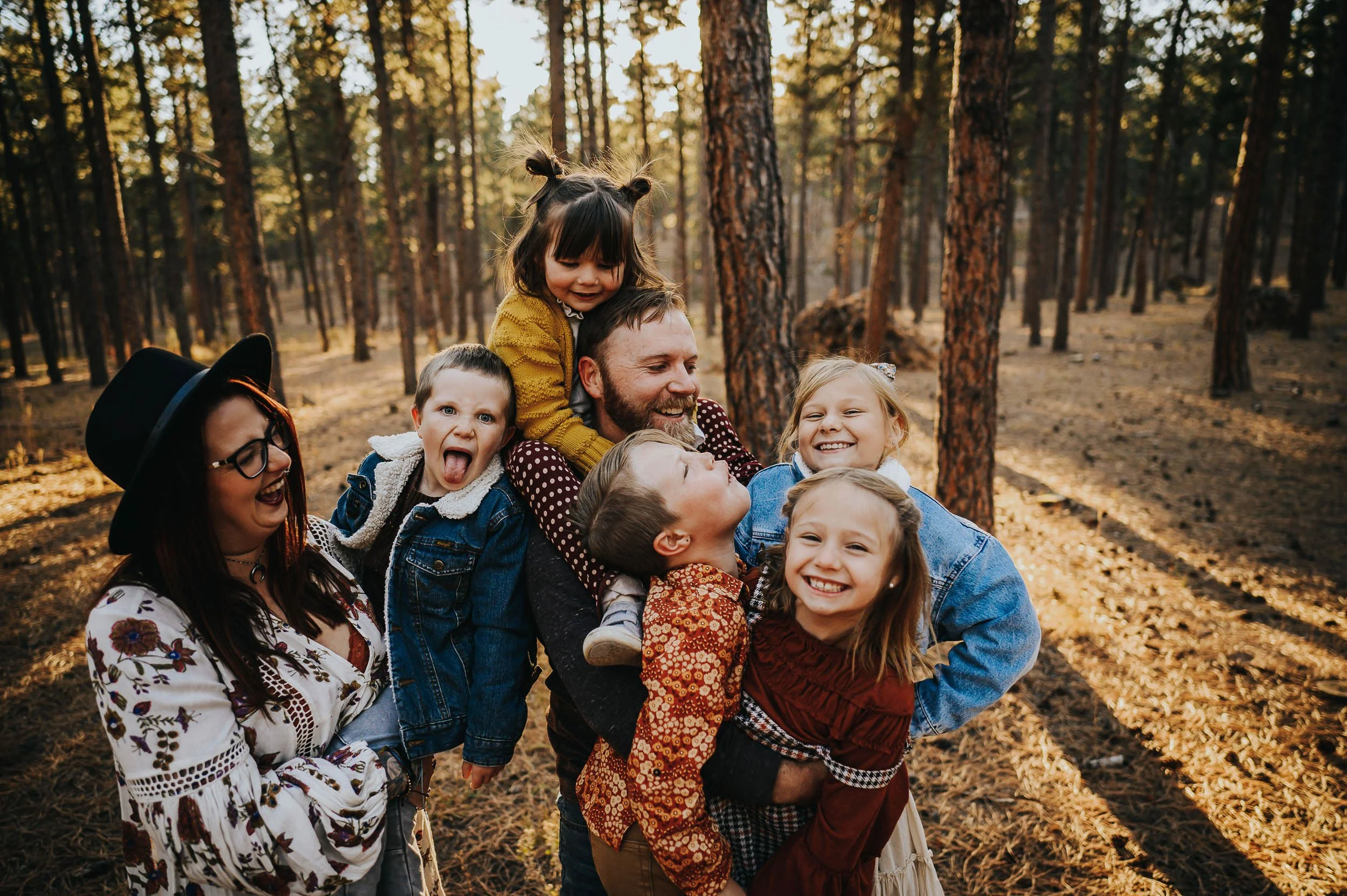
Building the palette
Once you have your anchor, choose 3-5 colors for the rest of the family. These should:
Complement the anchor without competing with it
Include a mix of light, medium, and dark tones
Feel cohesive when you lay everything out together
A simple formula:
1-2 rich or saturated colors (burgundy, navy, forest green, rust, plum)
1-2 soft or muted tones (cream, ivory, dusty rose, dusty blue, taupe)
1 grounding neutral (tan, brown, olive, charcoal)
Not everyone needs to wear all the colors. Distribute them across the family so each person has one or two from the palette.
Example palettes
Warm and earthy: Rust, cream, olive, mustard, chocolate brown
Rich and romantic: Burgundy, ivory, forest green, taupe
Deep and moody: Plum, navy, cream, charcoal
Cool and grounded: Dusty blue, ivory, tan, olive
For more seasonal color guidance, check out my full post on the best colors for Colorado family photos in every season.
Texture, layers, and movement
Color is only part of the equation. What your clothes are made of, and how they move, matters just as much.
Texture adds dimension
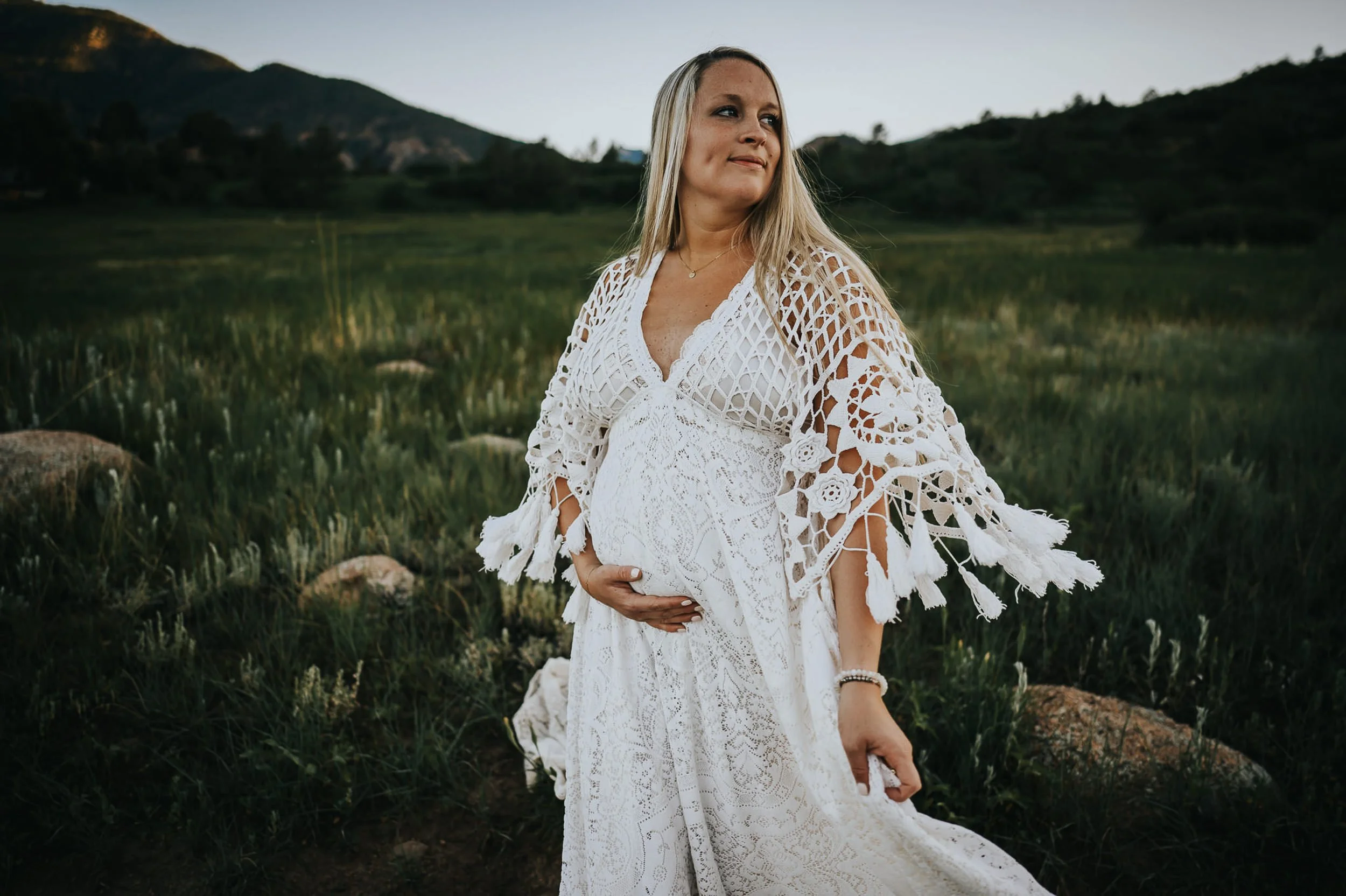
A chunky knit sweater catches light differently than a silk blouse. Linen has a softness that reads beautifully on camera. Denim adds weight and groundedness. Lace, cable knit, corduroy, velvet, all of these create visual interest that makes an image feel richer.
When you're coordinating a family, mixing textures keeps things from feeling flat. If mom is in something flowy and soft, dad might be in something more structured. If one child is in a chunky cardigan, another might be in a simple cotton dress.
You're creating contrast within the harmony.
Layers give you options
Layers are especially helpful in Colorado, where the temperature can shift dramatically during a session. But they also add visual depth.
A cardigan draped over shoulders. A denim jacket held casually. A scarf, a vest, a flannel tied around the waist. These pieces give you options during the session, we can add or remove layers for variety, and they photograph beautifully.
For kids, layers are practical too. A cute jacket gives warmth between shots and makes outfit changes easy.
Movement makes magic
Some of my favorite images happen when fabric catches the wind. A dress that flows. A skirt with swing. Wide-leg pants that move when you walk.
If you're choosing between two similar options, pick the one that moves. You'll be walking, spinning kids, sitting in grass, climbing on rocks. Clothes that move with you look natural in photographs. Clothes that are stiff or restrictive look, and feel, uncomfortable.
Guidance by family member
Moms
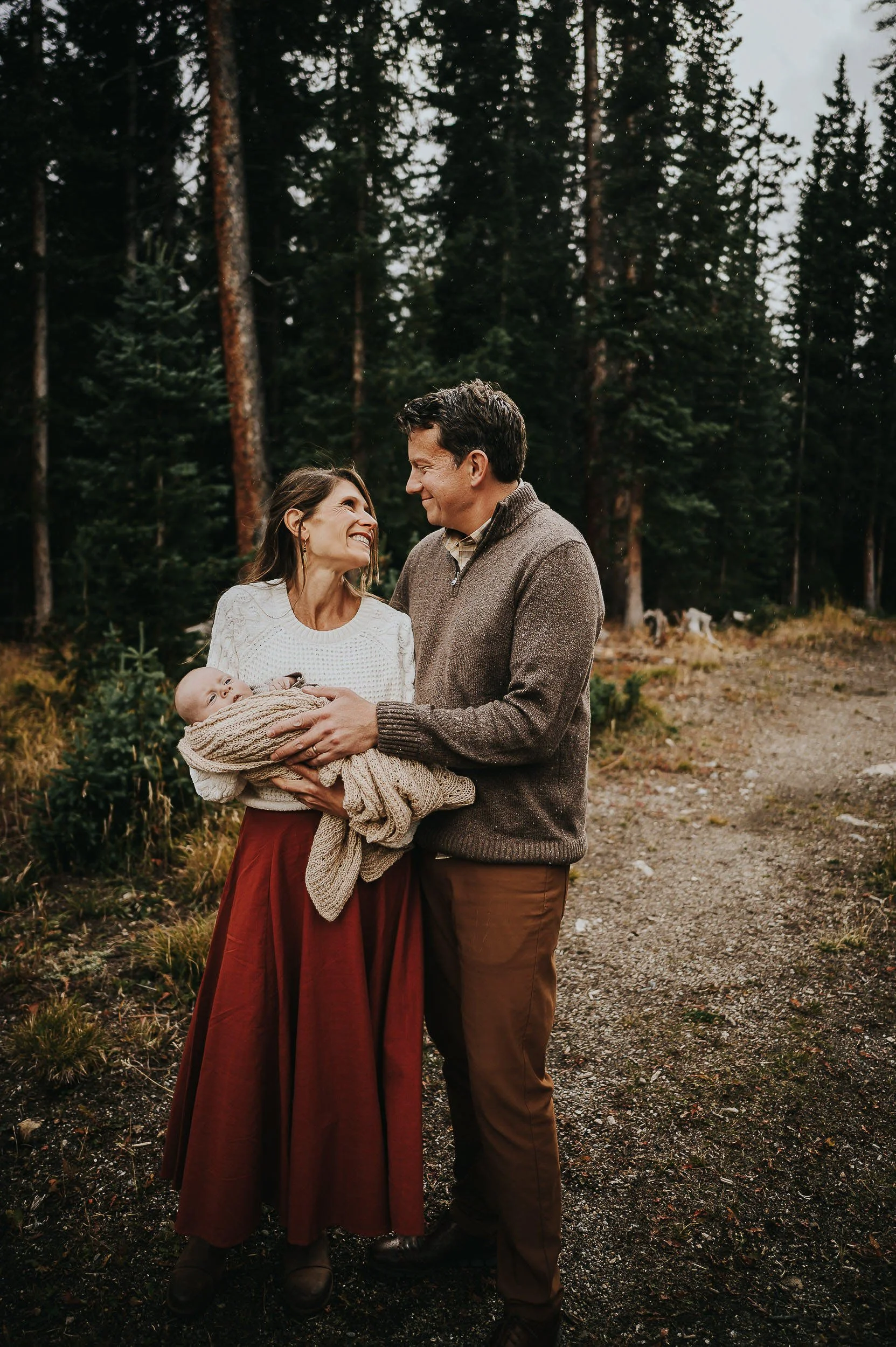
Start with something you feel beautiful in. A dress is almost always a safe choice, it photographs well, it's one piece, it moves. But jumpsuits, wide-leg pants with a tucked blouse, or a flowy skirt with a fitted top all work beautifully too.
Think about neckline. If you'll be holding kids, a lower neckline might shift in ways you don't love. Consider how the outfit will look from different angles, sitting, kneeling, bending.
And please: wear something you've worn before. You know it fits. You know it's comfortable. You won't be tugging at it all session.
Dads
Keep it simple. A well-fitting button-down in a solid color is almost always the right call. Rolled sleeves look relaxed and photograph well.
Avoid anything too baggy, too tight, or too casual. No graphic tees, no athletic wear, no logos. And watch the shoes, bright white sneakers pull focus.
If mom is wearing color, dad can ground the palette in neutrals. Or he can echo a color from her outfit in a more muted way. He doesn't have to stand out. He just has to fit in.
Kids
Comfort first. A kid who hates what they're wearing will let you know, and it will show in the photos.
If your daughter doesn't like dresses, don't force a dress. If your son won't keep shoes on, plan for barefoot. Let them wear something that feels like them, just make sure it fits the palette.
Simple is better. Solid colors or small prints. Avoid big logos, characters, or anything too busy.
Layers help, a cute jacket or cardigan gives options and warmth. And always bring a backup outfit. Just in case.
Babies
Soft, simple, neutral. Babies look beautiful in creams, ivory, and muted tones. Avoid anything scratchy, stiff, or complicated.
One-piece outfits are easiest. And if you're nursing, make sure your own outfit allows for it, I always build in time for feeding, and I've captured many beautiful nursing moments when mamas feel comfortable.
Extended and larger families
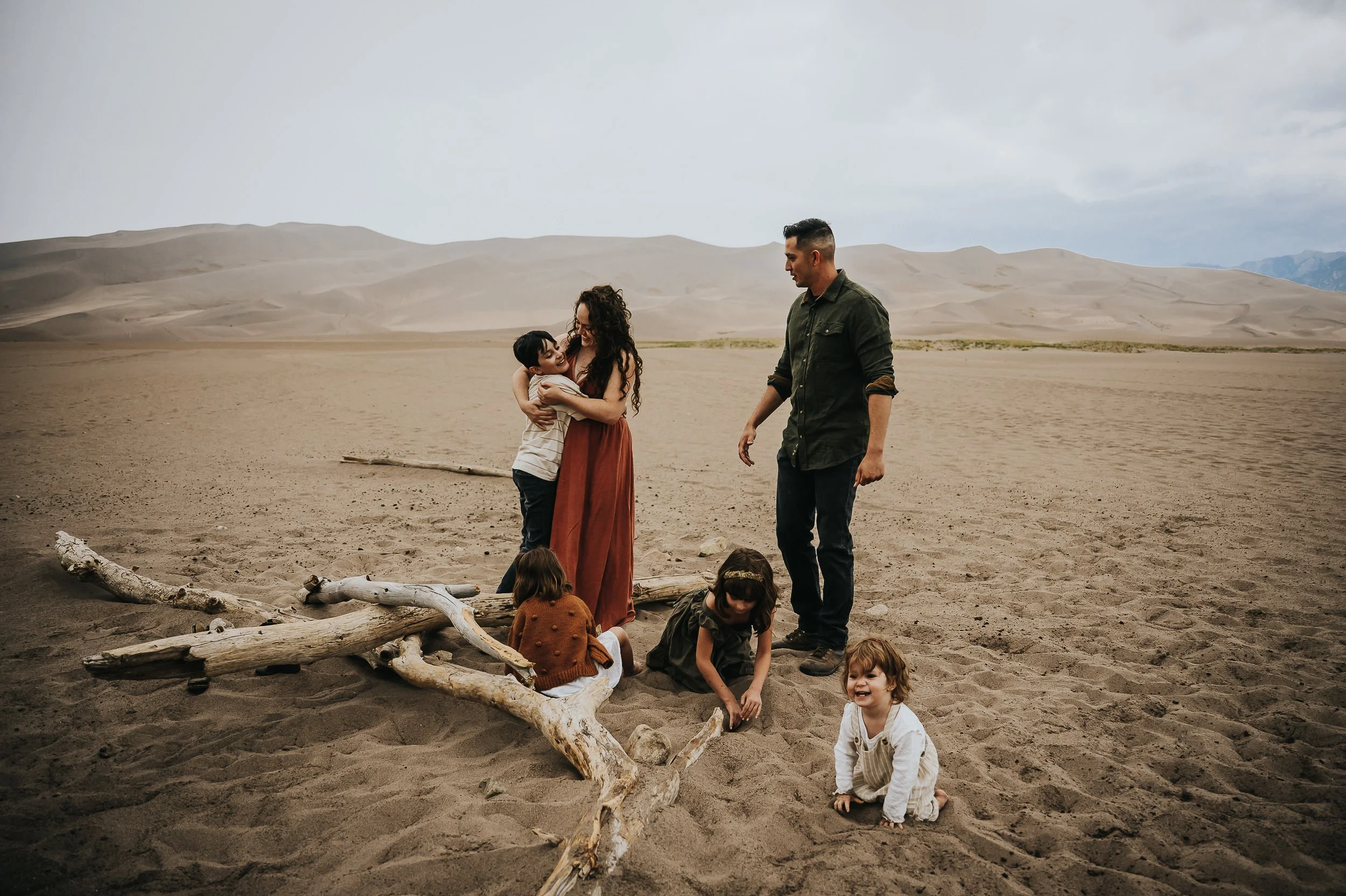
The more people, the more important the palette becomes. You need a system.
Start with 4-5 colors that work together. Assign each family unit (or each generation) a slightly different emphasis within that palette. For example:
Grandparents in neutrals (tan, cream, charcoal)
One family in warmer tones (rust, mustard, brown)
Another family in cooler tones (navy, dusty blue, ivory)
Everyone is different, but everyone is connected.
Avoid having one person in a completely different color world. If everyone else is in earth tones and one teenager shows up in neon green, they'll stick out, and not in a good way.
What to avoid
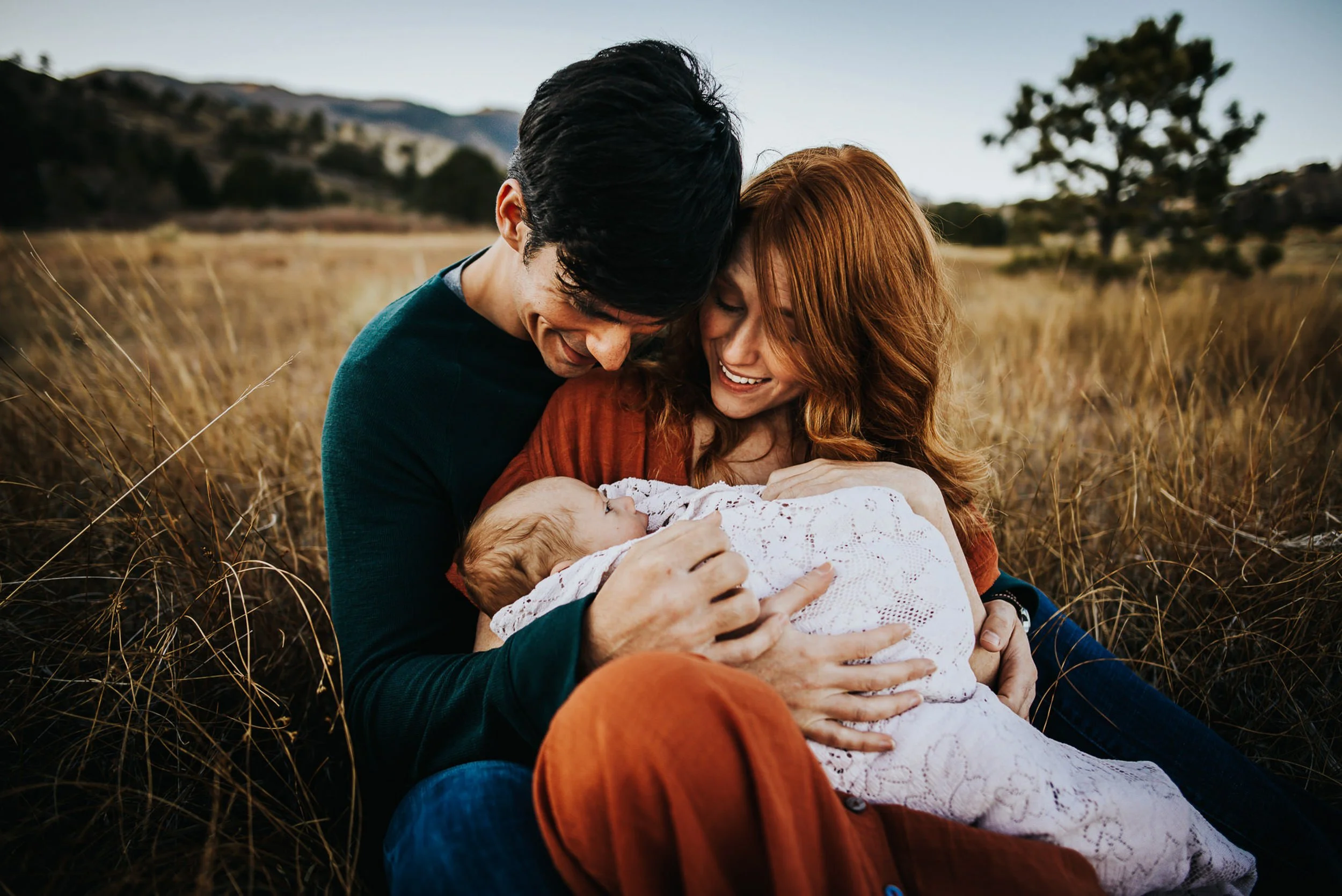
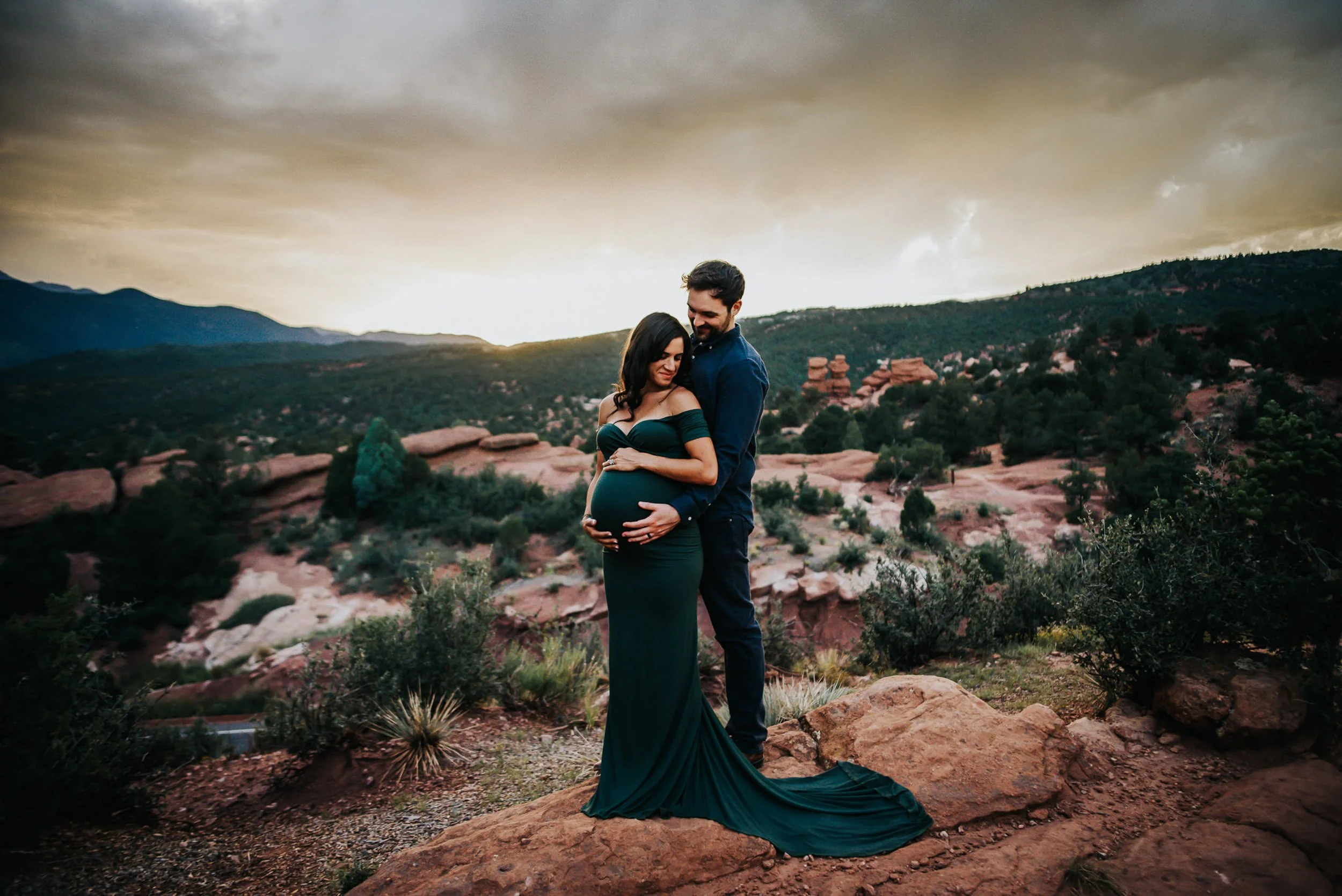
Hint: It’s not the beautiful coloring and texture of this newborn family session, because this one is on point.
Matching exactly We've covered this. Harmony, not sameness.
Too many patterns One or two subtle patterns can work. But if everyone is wearing a different print, the image becomes chaotic. Let one person wear the pattern (usually a kid), and keep everyone else in solids or very subtle texture.
Brand new, untested clothes You don't know if it fits right. You don't know if it's comfortable. Wear things you've worn before.
Bright white Bright white can overexpose and look harsh in photographs. Cream and ivory are much more forgiving and photograph beautifully.
Clothes that require constant adjusting If you're going to be tugging at your neckline or pulling down your hem all session, it will show. Choose pieces that stay put.
Overthinking it At some point, you have to stop. Lay everything out, make sure it looks cohesive, and trust it. The outfit is not the point of the photos. Your family is.
Realistic tips for busy parents
I know you don't have unlimited time to shop for the perfect outfit. Here's how to make this easier:
Start early. Don't wait until the week before. Give yourself a few weeks to pull things together, try things on, and fill gaps.
Shop your closet first. Most families already own pieces that work. You might just need one or two new items to tie everything together.
Use Amazon and Baltic Born. Both have affordable, photogenic options that ship fast. I can suggest specific pieces if you need help.
Send me photos. I offer wardrobe styling guidance to all my clients. Send me what you're considering, and I'll help you narrow it down.
Trust “good enough." Perfect doesn't exist. Good enough, comfortable, coordinated, true to your family, is more than enough.
You don't have to figure this out alone
This is one of the most stressful parts of booking a family session for a lot of parents. What do we wear? Will we look okay? What if we mess it up?
You won't mess it up. And I'm here to help.
Every Wild Prairie Photography client gets access to my wardrobe styling tools and guidance. Send me your outfit options. I'll help you build a palette, flag anything that might not photograph well, and make sure your whole family looks cohesive.
It's one less thing to carry. And it's part of what makes working with me feel easy.
For a broader overview of what to wear, including Colorado-specific guidance for seasons and locations, check out my complete guide on what to wear for family photos in Colorado.
Ready to book your session?
Once you know what you're wearing, the hard part is over. The rest is just showing up and being together.
Let's find a time, choose a location, and create something beautiful.